MAJOR GIFTS
In addition to our exceptional Class Gift Fund projects, individual support of Cornell has been impressive.
1987, as part of our 25th Reunion Campaign, the Class raised over $5.5 million from 738 classmates. At the time, it represented a new Cornell and national record for the most money ever raised by a single class. In 1997, we set a Cornell 35th Reunion Campaign record for dollars raised with $17,493,607, which still stands at Cornell. In 2012, for our 50th Reunion, we topped that number by more than $2 million. For the year ending June 2020, we raised $7,650,200. The news gets even better. In 2022, for our 60th Reunion, we raised $40,799,884, from 375 donors including 50 Tower Club members. Not only did we beat our goal for the year, but we also achieved a class best and set a new fundraising record for all 60th reunions at Cornell!!
Additionally, classmates also have made several major gifts, both private and public. Public gifts include the funding of buildings, classrooms, auditoriums, and learning centers. Private gifts have included sponsorship/endowments of professorships, scholarships, art works and collections at the Johnson Museum of Art and the Cornell libraries. Twenty-three members of the class have established scholarships; nine members of the class have established program or position endowments. Incredibly, the Class’s lifetime giving to the university is in excess of $300,000,000!!!
And, while we are patting ourselves on the back, here’s a shout-out to our classmates whose extraordinary major gifts have been particularly notable and highly visible. Hats off!
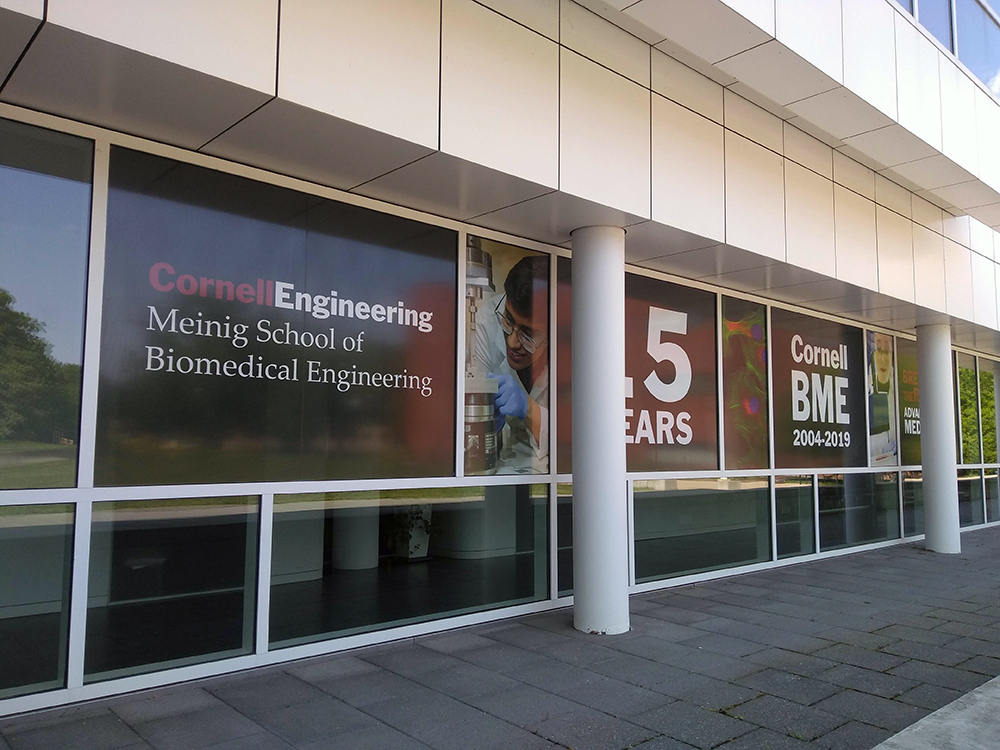
Nancy E. and Peter C. Meinig School of Biomedical Engineering
A generous endowment from Nancy E. Schlegel Meinig ’62 and Peter C. Meinig ‘61 and their family to the Department of Biomedical Engineering resulted in the expansion and elevation of the BME program. Renamed as the Meinig School of Biomedical Engineering, the expanded BME program is the centerpiece of Cornell Engineering’s strategic push to advance the wider multi-disciplinary field of bioengineering, which impacts the university broadly, from Engineering and the College of Veterinary Medicine in Ithaca to Weill Cornell Medical College and Cornell Tech in New York City
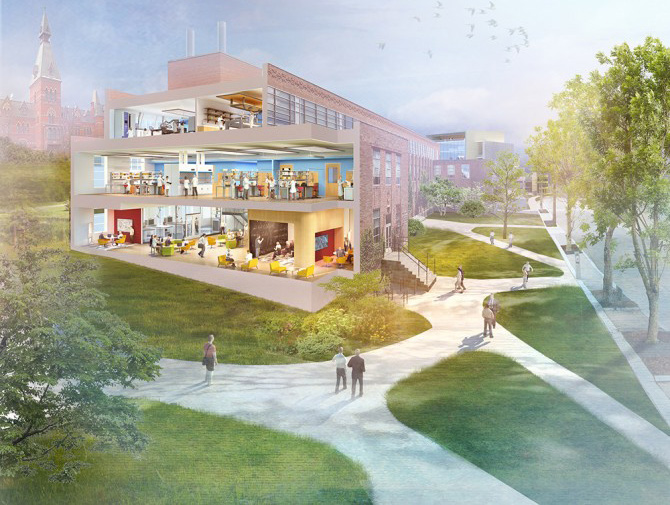
The Samuel C. Fleming Molecular Engineering Lab
A gift of classmate Sam and his wife Nancy, this suite of state-of-the-art molecular engineering laboratories is being constructed inside Olin Hall. Comprising 7,300 square feet of new laboratory space on the second and third floors of Olin Hall’s north wing, the space will be used for research on drug design, drug delivery, biomedical diagnostics and the discovery of new materials. (Photo: Cornell Engineering)
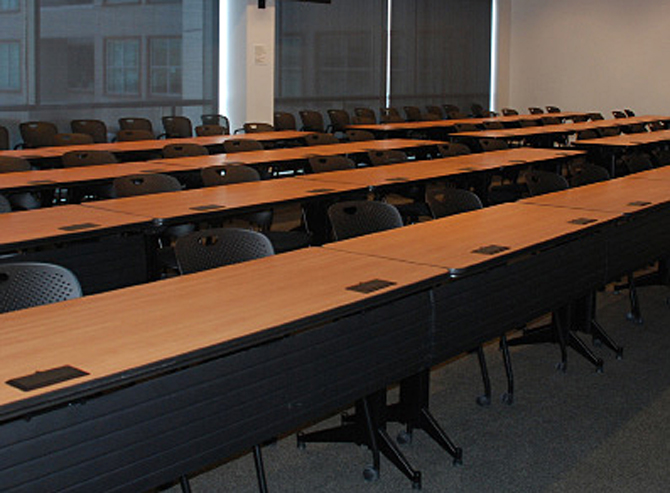
The Fleming Lecture Hall
In 2008, the Flemings made one of the first private gifts to Weill Hall to name a lecture hall, The Fleming Lecture Hall, a gift that was in addition to providing significant endowment support for the Weill Institute and new graduate fellowships in chemical and biomolecular engineering. (Photo: Judith Prenske Rich)
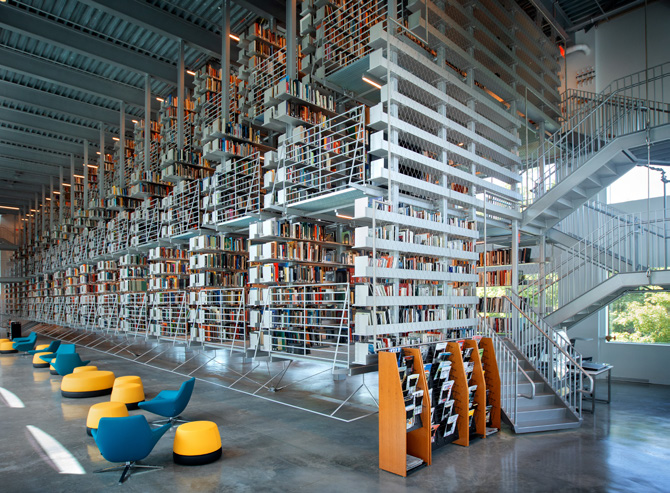
Mui Ho ’62 Fine Arts Library
A state-of-the-art facility on the top two floors of Rand Hall with massed stacks of books as its centerpiece, digital resources, and voluminous reading and study space. Along with 8,000 square feet of shop space for the College of Architecture, Art and Planning occupying the first floor, the 107-year-old industrial building has been entirely rehabilitated. (Photo: Jason Koski)
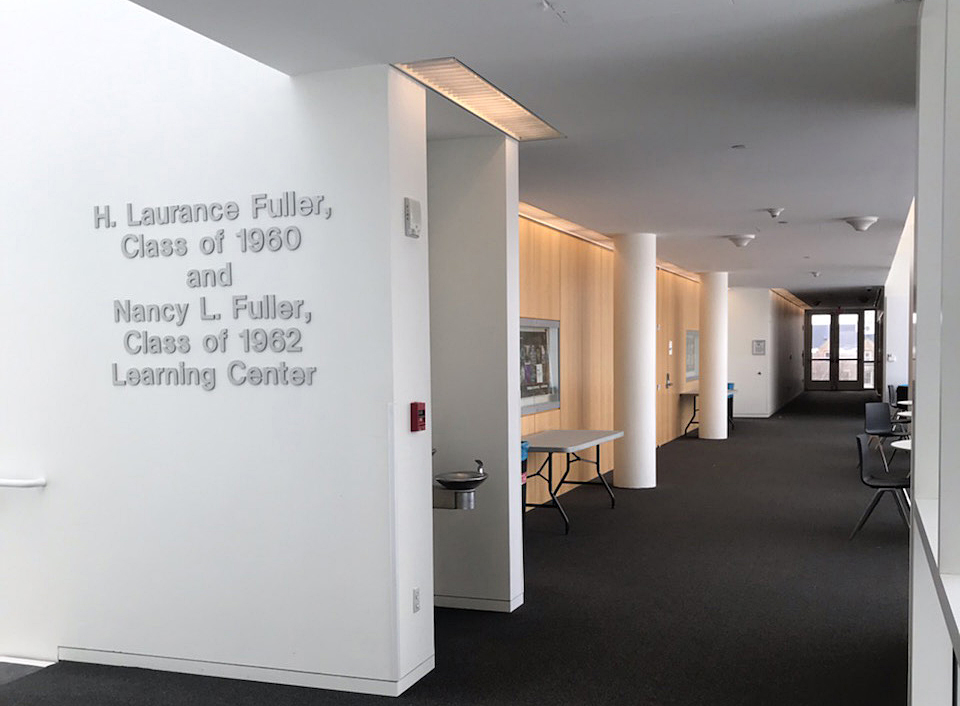
The Fuller Learning Center
The two-story structure — a gift of H. Laurence Fuller ‘60 and Nancy Lawrence Fuller ’62 — serves as the educational and outreach focal of Weill Hall, the Life Sciences Technology Building. (Photo: UREL)
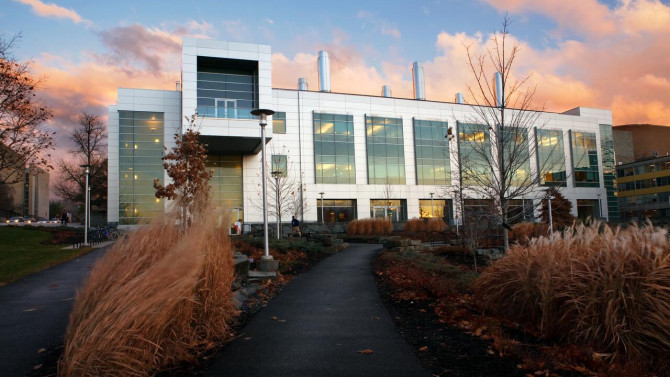
David A. Duffield College of Engineering
Following a transformational gift in January 2026 from Dave Duffield to the College of Engineering, the college will be named the David A. Duffield College of Engineering. More than $520 million in contributions from Dave – including a new pledge of $371.5 million and a 2025 commitment of $100 million, combined with previous gifts – led to this historic moment. Dave’s newest pledge is the largest single gift in Cornell history! His cumulative giving across Cornell’s colleges now totals $550 million, placing him among the university’s leading all-time donors.
His prior gifts include Duffield Hall, completed in 2004, which is one of the country’s most sophisticated research and teaching facilities for nanoscale science and engineering. It supports research and instruction in electronic and photonic devices, microelectromechanical devices, advanced materials processing, and biotechnology devices.
An historic gift in 2025 is enabling a significant expansion of Duffield Hall to encompass the space occupied by Phillips Hall, creating a new state-of-the art home for the School of Electrical and Computer Engineering and critical new lab space for strategic research priorities.
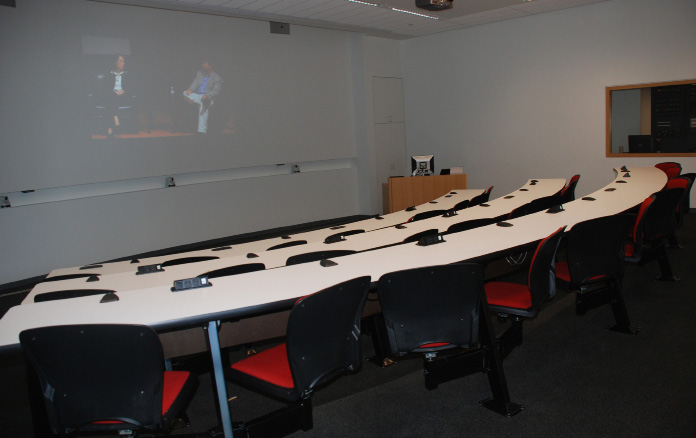
Young Teleconference Center
A gift of Phillip and Nancy Halsey Young, both ‘62, the teleconference center, located in the Fuller Learning Center/Weill Hall, provides audio-visual, video conferencing, and other communications technologies. (Photo: Judith Prenske Rich)
The Cornell CALS Ashley School of Global Development and the Environment
In December, 2025, the College of Agriculture and Life Sciences (CALS) announced that a $55 million gift from Stephen Ashley ‘62, MBA ‘64 to CALS will establish the Cornell CALS Ashley School of Global Development and the Environment, combining the Department of Global Development and the Department of Natural Resources and the Environment. The school is named in honor of Stephen whose gift to endow the school is the largest in CALS history. The College is housed across several buildings, with Rice Hall as the main building, and including Fernow Hall and Atkinson Hall, as well as the Global Development area in the basement of Mann Library, where the Daniel Sisler Student Hub is located. (Photo: Adam Murtland)